
This post may contain affiliate links. If you buy through them, I may earn a small commission at no extra cost to you. I’m not a financial advisor. These are simple, everyday tips that have worked for real families.
If the word “budget” makes you want to hide under a blanket, you’re not alone. Most of us were never taught how to make one. We just pay the bills, hope there’s something left, and feel a little sick when we check the bank account.
A budget isn’t a punishment. It’s simply a plan for your money, so it goes where you want it to go instead of disappearing on drive-thru dinners and late fees. Here’s the simple way I’d tell any mom (or grandma!) to start.
Step 1: Figure out what comes in each month
Write down every dollar your family brings home after taxes: paychecks, side income, child support, anything regular. If your income changes month to month, use your lowest month. It’s better to be pleasantly surprised than short.
Step 2: List every bill and when it’s due
Pull up your bank statement from last month and write down every bill: rent or mortgage, utilities, phone, insurance, car payment, subscriptions, all of it. Next to each one, write the due date. Seeing them all in one place is the moment most families realize where their money has been going.
Tip: Look for “little leaks” while you’re at it. Streaming services, apps and memberships you forgot about can easily add up to $50 or more a month.
Step 3: Estimate your everyday spending
Groceries, gas, eating out, kids’ activities, household supplies, gifts. These change every month, which is why they wreck most budgets. Look back at the last two or three months of spending and take an average. Be honest here. A budget built on wishful thinking won’t last a week.
Step 4: Give every dollar a job
This is the heart of it. Take your income and assign every dollar somewhere, until income minus expenses equals zero. That doesn’t mean you spend it all. Savings and paying down debt count as jobs too!
A simple order that works for most families:
- The basics first: housing, utilities, food, transportation and insurance.
- Minimum debt payments so nothing goes late.
- A starter emergency fund, even $20 a paycheck.
- Sinking funds for things you know are coming, like Christmas, birthdays and car repairs.
- Extra debt payments or bigger savings goals.
- Fun money. Yes, really! A budget with zero fun is a budget you’ll quit.
Step 5: Budget by paycheck if money is tight
If you’re paid every week or every two weeks, a monthly budget can feel confusing because the bills don’t line up with payday. Try a paycheck budget instead: list which bills get paid from each paycheck, based on what’s due before the next one. It’s a game-changer for families living paycheck to paycheck.
Step 6: Track your spending for one month
Write down everything you spend for 30 days. Every coffee, every school fundraiser, every “quick” trip to the store. You don’t have to change anything yet. Just watch. Most people are shocked by one category (for many families it’s food), and that’s where your first easy win will be.
Step 7: Have a weekly money date
Set aside 15 minutes once a week, maybe Sunday night with a cup of tea. Check what you’ve spent, pay anything due, and adjust the plan. Budgets aren’t “set it and forget it.” They’re more like a garden: a little tending every week keeps things growing.
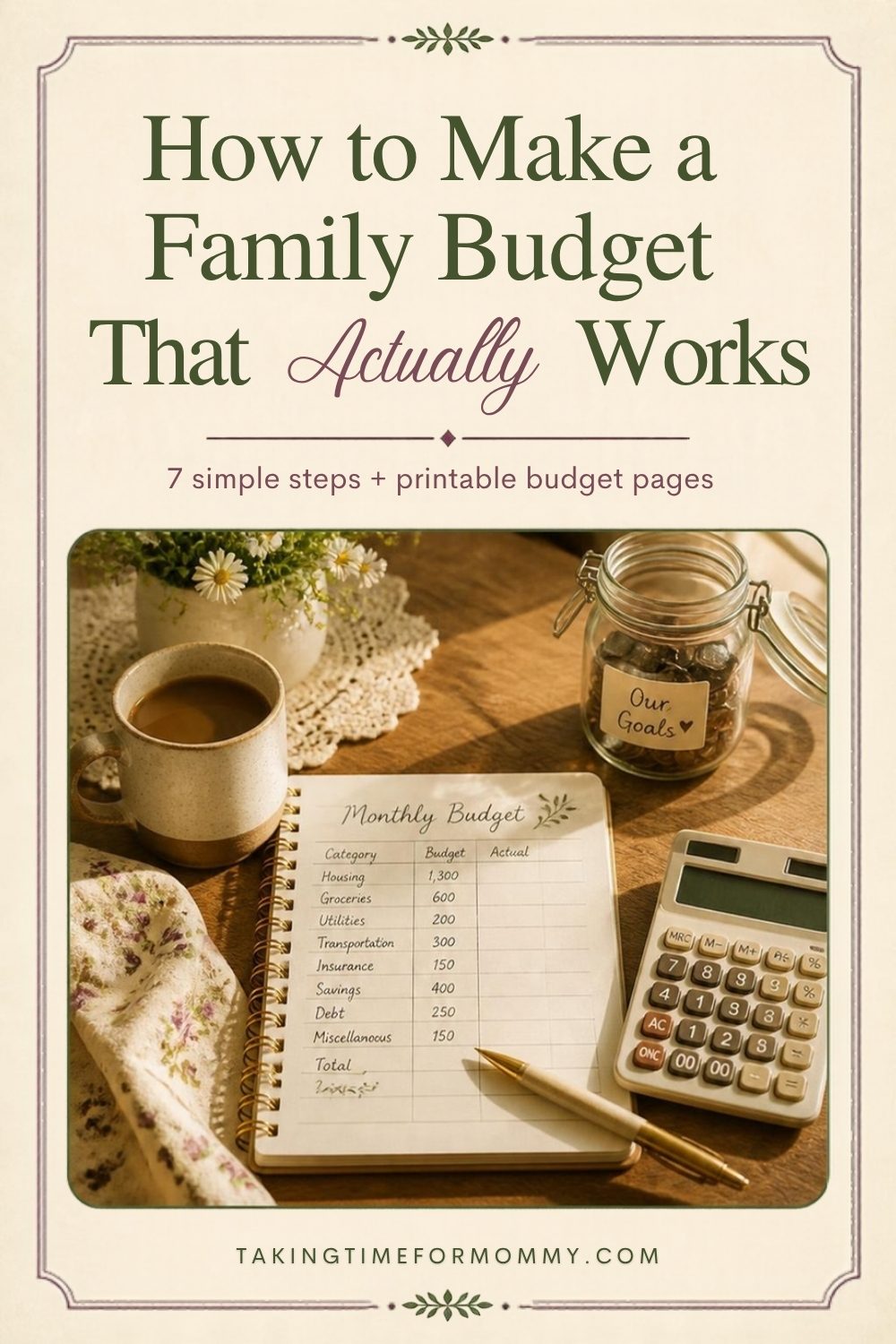
Want it all on paper? The Money & Savings Binder has everything from this post ready to print: a monthly budget, a paycheck budget, a bill calendar and bill tracker, a subscription tracker, a spending log, debt snowball pages, sinking fund trackers and a monthly check-in. It’s undated, so you can print fresh pages every month. Get the Money & Savings Binder ($9) →
Common budget mistakes (and how to avoid them)
- Forgetting irregular expenses. Car registration, school pictures and the annual insurance bill aren’t surprises. Divide them by 12 and save a little each month.
- Making it too strict. If you cut every treat, you’ll burn out. Leave a little breathing room.
- Not including your spouse. A budget only works if everyone who spends money is on the same page.
- Quitting after one bad month. Everyone blows the budget sometimes. Just start fresh the next month.
Family budget FAQ
How much should a family spend on groceries?
It depends on your family size and where you live, but tracking what you actually spend for a month is the best starting point. Then aim to trim 10% at a time. Our grocery budget tips can help.
What’s the easiest budget method for beginners?
The “give every dollar a job” method above (sometimes called a zero-based budget) is simple and works on any income. If you’re paid weekly or every two weeks, start with a paycheck budget.
How long does it take to get used to budgeting?
Most families say it takes about three months. The first month is a guess, the second is better, and by the third you’ll know your numbers. Stick with it!
Want a fun way to start saving while you get your budget going? Grab the free 52-Week Savings Challenge printable. It’s in my Free Printables Library, free when you join my email list.
You might also like:
Leave a Reply