
This post may contain affiliate links. If you buy through them, I may earn a small commission at no extra cost to you.
Teaching your teen to drive is a big milestone, and it can be nerve-racking for both of you! A little planning makes the lessons calmer and safer. Here’s how to get started.
Before the first lesson
- Know your state’s rules. Check your state’s DMV website for learner’s permit requirements, how many supervised driving hours are required, and the graduated licensing rules for new drivers.
- Ride along as a passenger for a few trips first so you get used to seeing the road from the passenger seat.
- Plan your routes. Start in an empty parking lot, then quiet neighborhood streets, then busier roads.
During lessons
- Keep lessons short. Twenty to thirty minutes is plenty at first. Stick to daylight and good weather.
- Focus on one or two skills per lesson, like turning, parking or merging.
- Give instructions early and clearly. “At the next stop sign, turn right.”
- Keep chatter to a minimum. Talk mostly to give directions and praise.
- Handle mistakes calmly. Have them pull over when it’s safe and talk it through. No lectures.
- Stop if emotions run high. If either of you is upset or angry, end the lesson. Driving emotional isn’t safe.
Once they’re driving on their own
- Set clear rules about passengers, night driving and curfews.
- Phones go in the glove box or on Do Not Disturb while driving.
- Seat belts every time, for everyone.
- Consider a written parent-teen driving agreement.
- Keep practicing together in rain, at night and on highways.
Love a good printable? My Free Printables Library has planners, trackers and seasonal goodies, free when you join my email list.
FAQ
How many practice hours does my teen need?
It depends on your state. Many require 40 to 50 supervised hours, including some at night.
Should my teen take a driver’s ed class too?
Driver’s education adds professional instruction and may lower insurance costs in some states.
When should my teen drive on the highway?
After they’re comfortable with steering, braking, merging and lane changes on regular roads.
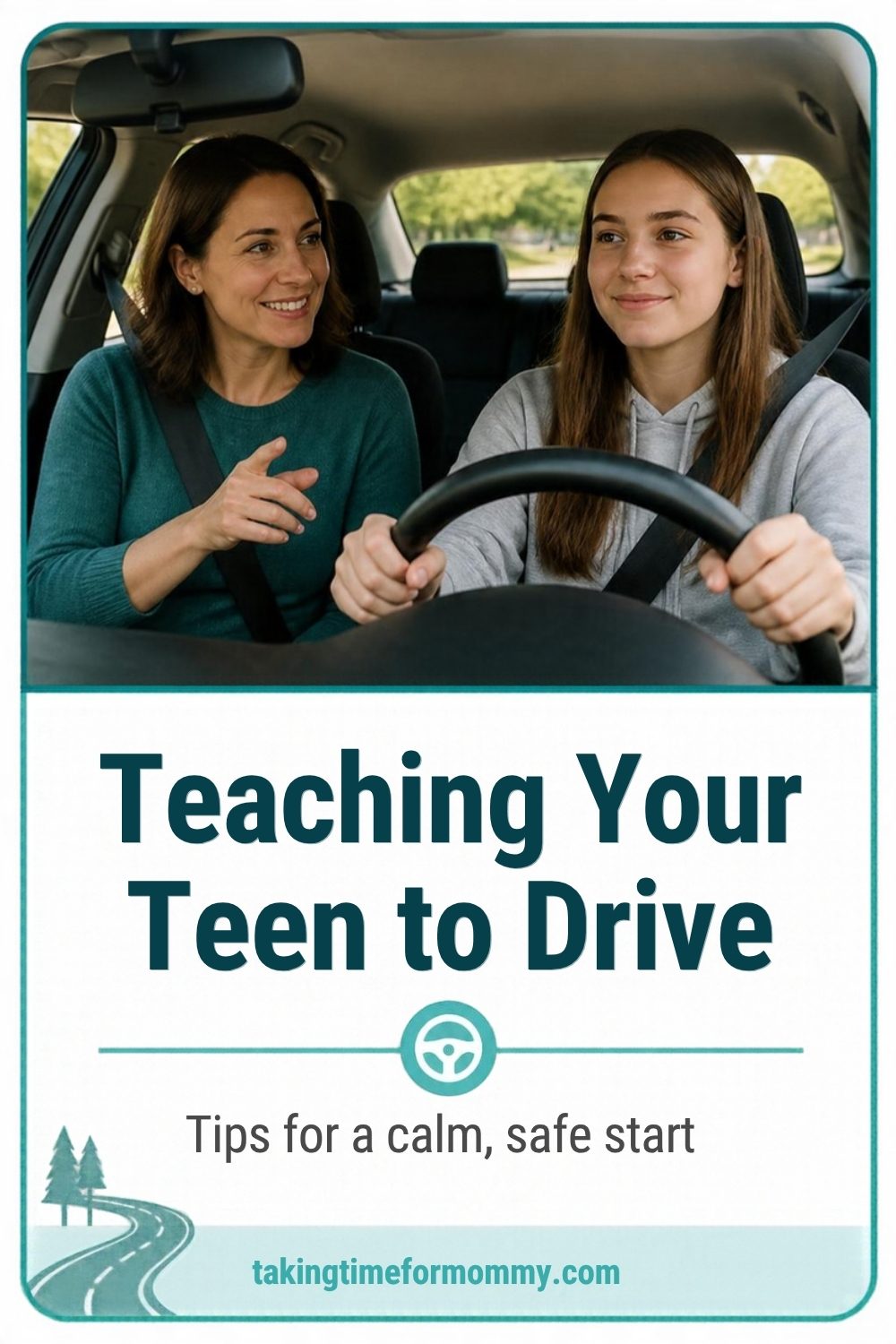
Save this for later! Pin it to your favorite Pinterest board.
You might also like:
Leave a Reply