This post may contain affiliate links. If you buy through them, I may earn a small commission at no extra cost to you.
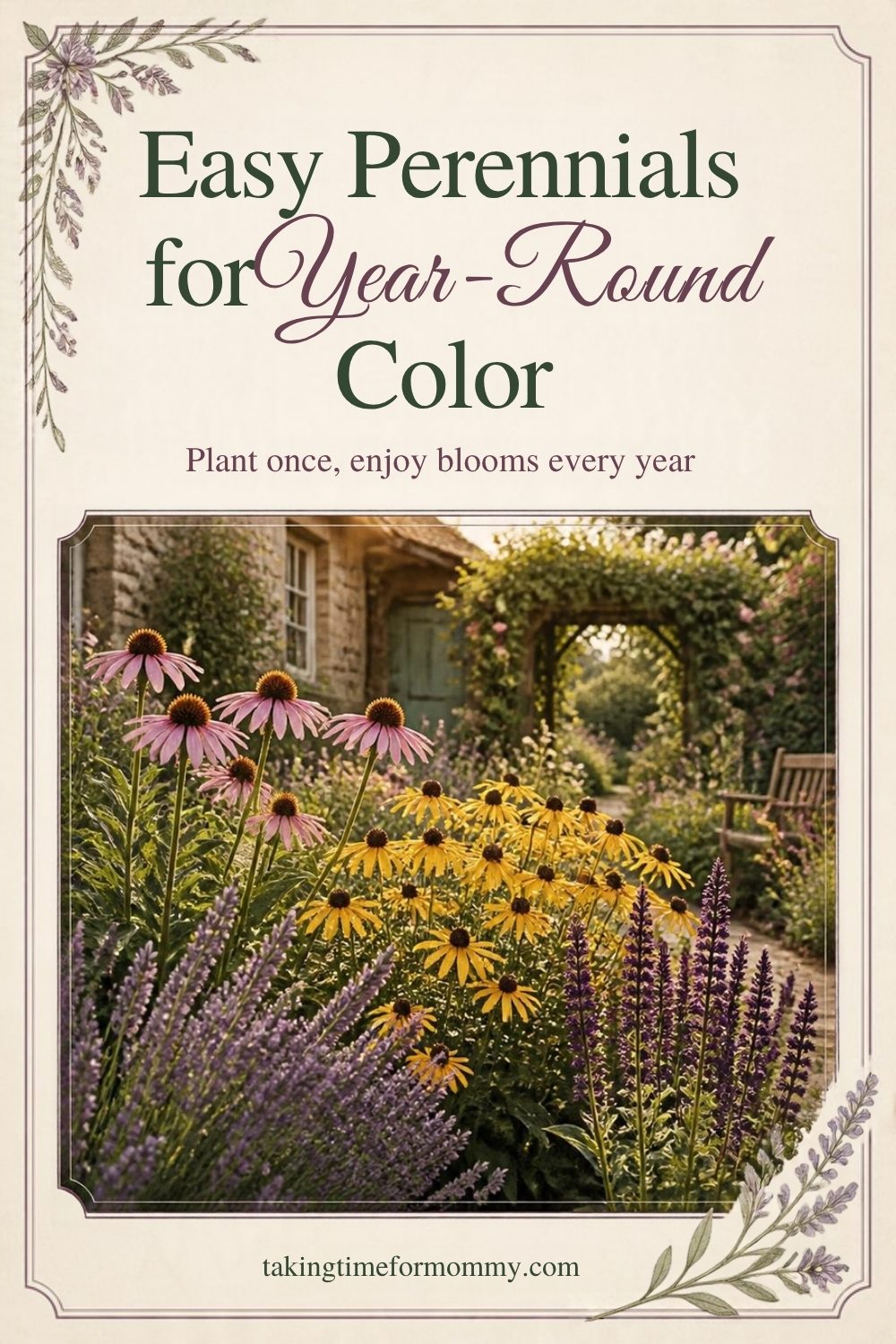
If you love a pretty garden but don’t love replanting every spring, perennials are your new best friend. Plant them once and they come back year after year, often bigger and better each time. With a little planning, you can have something blooming from early spring right into fall.
Here are easy, reliable perennials for nonstop color, plus simple tips for planting them.
Why plant perennials?
- They come back every year, so you save money over time.
- They’re low maintenance once they’re settled in.
- Many feed pollinators like bees and butterflies.
- They multiply. Divide them every few years and you get free plants to share!
Know your growing zone first
Every perennial has a range of USDA hardiness zones where it grows best. Look up your zone (the USDA has a free map online) and check plant tags before you buy. In hot, humid climates like the Southeast, look for heat-tolerant varieties, and ask your local garden center what thrives in your area.
Spring bloomers
- Creeping phlox: a carpet of pink, purple or white flowers.
- Bleeding heart: sweet heart-shaped flowers for shady spots.
- Peonies: big, fragrant blooms that can live for decades in cooler climates.
- Columbine: delicate flowers loved by hummingbirds.
Summer bloomers
- Coneflowers (echinacea): tough, drought-tolerant and a butterfly magnet.
- Black-eyed Susans: cheerful gold flowers that bloom for weeks.
- Daylilies: nearly impossible to kill, with tons of colors.
- Salvia: spikes of purple or red that bees love.
- Lavender: fragrant and pretty, but it needs good drainage and plenty of sun.

Late summer and fall bloomers
- Sedum (stonecrop): succulent leaves and pink blooms that turn rusty in fall.
- Asters: a burst of purple when everything else is fading.
- Ornamental grasses: beautiful movement and texture into winter.
- Mums: look for “hardy” garden mums if you want them to come back.
Foliage for year-round interest
Flowers come and go, but great leaves look good all season. Hostas (for shade), heuchera (coral bells, in shades of lime, plum and bronze) and lamb’s ear (soft and silvery, a kid favorite!) add color even when nothing is blooming.
Simple planting tips
- Plant in spring or fall when temperatures are mild.
- Read the tag for sun, spacing and mature size.
- Mix compost into the soil before planting.
- Water well the first year while roots get established.
- Mulch to hold in moisture and keep weeds down.
- Plant in groups of three or five for a fuller look.
Track your blooms all year. The Garden Planner has a bloom tracker, plant profiles and a layout grid, so you can spot the color gaps and fill them next season. It’s undated, so you can use it every year. Get the Garden Planner ($7) →
Perennials FAQ
Do perennials bloom the first year?
Many do, but often lightly. There’s an old gardener’s saying: “First year they sleep, second year they creep, third year they leap!”
What are the easiest perennials for beginners?
Daylilies, black-eyed Susans, coneflowers, sedum and hostas are all tough, forgiving and widely available.
Love a good printable? My Free Printables Library is free when you join my email list.
You might also like:
Leave a Reply