
This post may contain affiliate links. If you buy through them, I may earn a small commission at no extra cost to you.
Newborns sleep a lot (often 14 to 17 hours a day), but in short stretches, because their tiny tummies need to eat every few hours. Night wakings are normal and won’t last forever. Here’s what to expect, how to keep your baby safe while sleeping, and gentle habits that help everyone sleep better as the weeks go by.
A quick note: I’m a mom, not a doctor. This post is general information, not medical advice. Always check with your pediatrician about your own child.
Safe sleep first: the ABCs
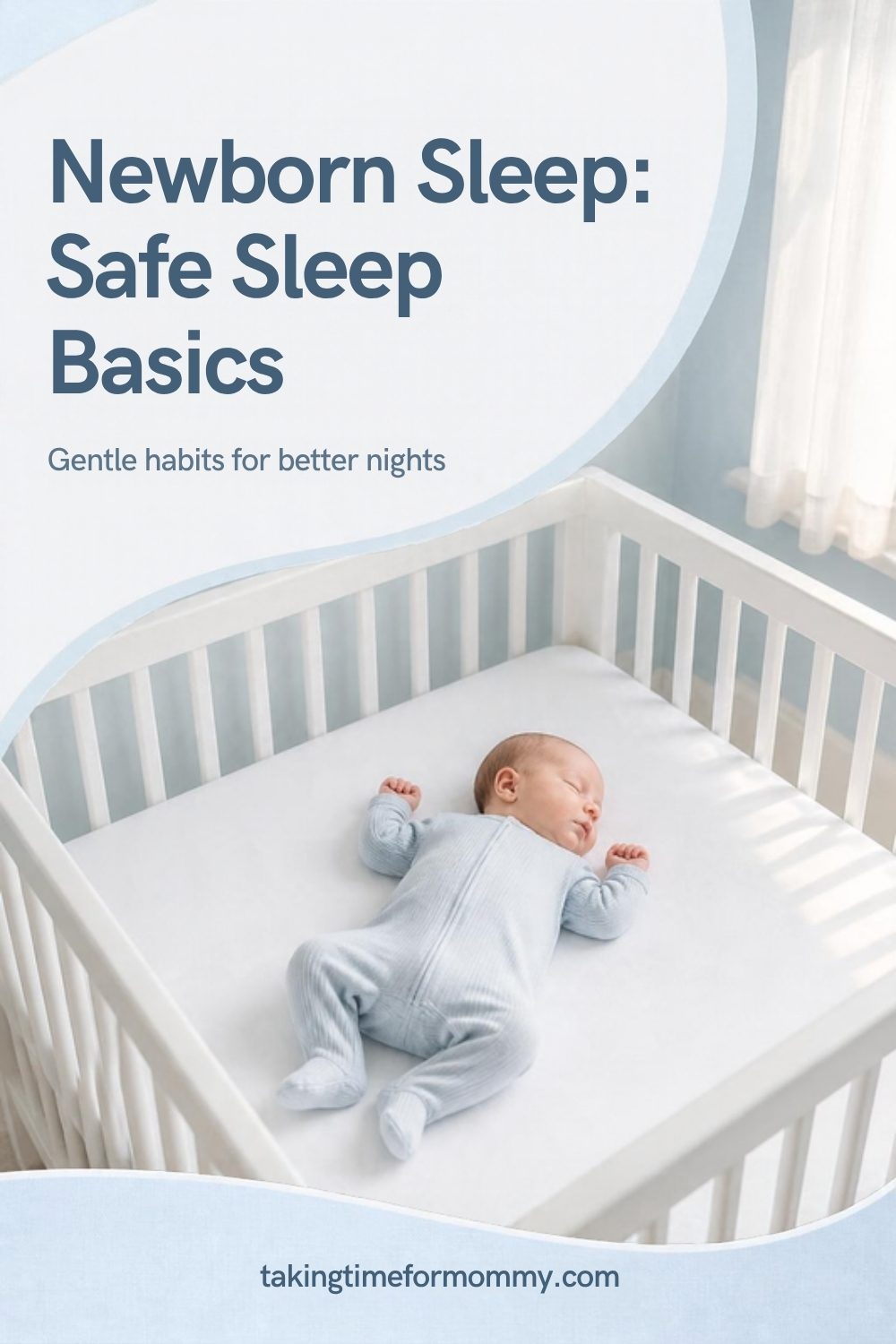
- Alone: your baby sleeps in their own space, with no pillows, blankets, bumpers or stuffed animals.
- Back: always place your baby on their back to sleep, for naps and at night.
- Crib: use a firm, flat mattress with a fitted sheet in a crib, bassinet or play yard that meets safety standards.
- Room-share (baby’s own bed in your room) for at least the first 6 months, but don’t bed-share.
- If your baby falls asleep in a car seat, swing or carrier, move them to a flat, safe sleep surface as soon as you can.
- Keep the room comfortably cool and dress baby in a sleep sack instead of loose blankets.
- Stop swaddling as soon as your baby shows signs of trying to roll over.
Gentle habits that help
- Teach day from night. Keep days bright and active and nights dark, quiet and boring. Keep night feedings calm with dim lights.
- Watch for sleepy cues. Yawning, rubbing eyes and staring off mean it’s time to sleep. Newborns usually can’t stay happily awake for more than about an hour.
- Build a soothing toolkit. Swaddling (until rolling), gentle rocking, shushing and white noise all help, so baby doesn’t rely only on feeding to fall asleep.
- Offer a pacifier at sleep time. If you’re breastfeeding, many doctors suggest waiting until feeding is well established, often around 3 to 4 weeks. If it falls out after baby is asleep, you don’t need to put it back.
- Start a simple bedtime routine. Around 6 to 8 weeks, try the same few steps each night: bath, feeding, a song, then into bed.
- Try putting baby down drowsy but awake sometimes, so they start learning to fall asleep in their own bed.
Take care of you, too
Sleep when you can, accept help, and let the housework wait. If you feel hopeless, can’t sleep even when the baby does, or have scary thoughts, call your doctor right away; postpartum depression is common and treatable.
Love a good printable? My Free Printables Library has planners, trackers and seasonal goodies, free when you join my email list.
FAQ
How much do newborns sleep?
About 14 to 17 hours a day, in stretches of 2 to 4 hours.
When will my baby sleep through the night?
Every baby is different. Many sleep longer stretches by 4 to 6 months.
Is it okay for my baby to sleep in a swing or car seat?
Not for regular sleep. Move them to a flat, firm crib or bassinet once you’re home or out of the car.
Save this for later! Pin it to your favorite Pinterest board.
You might also like:
Leave a Reply