
This post may contain affiliate links. If you buy through them, I may earn a small commission at no extra cost to you.
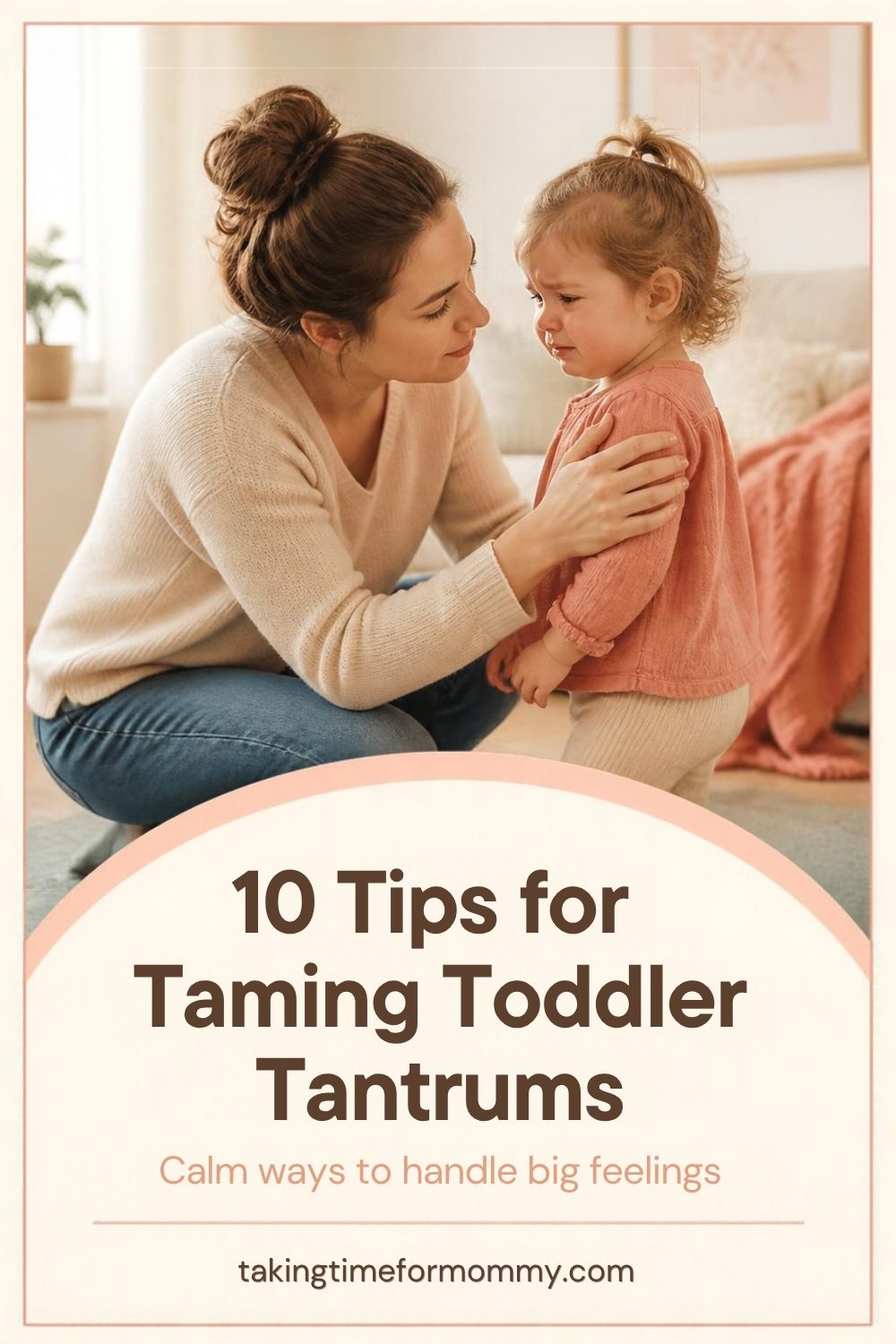
If you’ve ever had a toddler melt down in the middle of the grocery store, you are in very good company. Tantrums are a normal part of toddlerhood. A toddler has big feelings and not yet the words or brain wiring to handle them. Thinking of a tantrum as a storm of emotion, rather than a power play, makes it so much easier to stay calm. Here are ten tips that really help.
Before a tantrum: prevent what you can
- Watch for triggers. Most meltdowns happen when kids are tired, hungry, rushed or overstimulated. Plan errands after naps and bring snacks.
- Step in before frustration boils over. Offer a little help with a tricky puzzle or shoe, without taking over.
- Give simple choices. “Red cup or blue cup?” “Walk or hop to the car?” Small choices help toddlers feel in control.
- Pick your battles. Rain boots with a party dress? Let it go. Save your “no” for safety, like car seats and holding hands near the street.
- Warn before transitions. “Two more slides, then it’s time to go” works much better than a sudden exit.
During a tantrum: stay calm and close
- Keep your own cool. Take a deep breath. Your calm helps your child find theirs.
- Name the feeling. “You’re so mad the tower fell down.” Feeling understood helps toddlers settle faster.
- Keep them safe and stay nearby. Move them away from anything dangerous. Some kids want a hug; others need a little space with you close by. Don’t walk away in a public place.
- Don’t give in to stop it. If the tantrum is about a cookie you said no to, calmly stick with your answer. Giving in teaches that tantrums work.
After a tantrum: reconnect
- Hug and move on. Once they’re calm, offer comfort and a quiet activity. Comfort isn’t giving in; it shows your love doesn’t depend on behavior. Later, when everyone’s calm, you can talk about better ways to show mad feelings.
When to talk to your pediatrician
Check in with your child’s doctor if tantrums are getting worse after age 4, last a very long time, happen many times a day, or if your child hurts themselves or others during them.
Want routines that stick? The Family Home Binder has chore charts for the kids, family calendars, daily and weekly checklists and more, all in one printable binder. Get the Family Home Binder ($12) →
FAQ
At what age do tantrums usually stop?
They often peak between 18 months and 3 years and ease up by age 4 as language improves.
Should I ignore a tantrum?
For attention-seeking tantrums, calmly ignoring the behavior while staying close can work. Always keep your child safe.
How do I handle a tantrum in public?
Stay calm, keep your child safe, and if needed, scoop them up and go somewhere quiet until it passes.
Save this for later! Pin it to your favorite Pinterest board.
You might also like:
Leave a Reply