This post may contain affiliate links. If you buy through them, I may earn a small commission at no extra cost to you.
It’s that time of year when colds and the flu make the rounds. We’re all indoors more, so germs spread easily from person to person. There’s no magic pill, but these everyday habits really do help your body do its job.
A quick note: I’m a mom, not a doctor. This post is general information, not medical advice. Please talk with your doctor before starting a new supplement or routine, especially if you’re pregnant, nursing, have a health condition or take medication.
- Get enough sleep. Your body does its repair work while you sleep. Most adults need 7 or more hours a night, and kids need even more.
- Wash your hands often. Scrub with soap and water for 20 seconds (about two rounds of “Happy Birthday”), especially before eating and after being out.
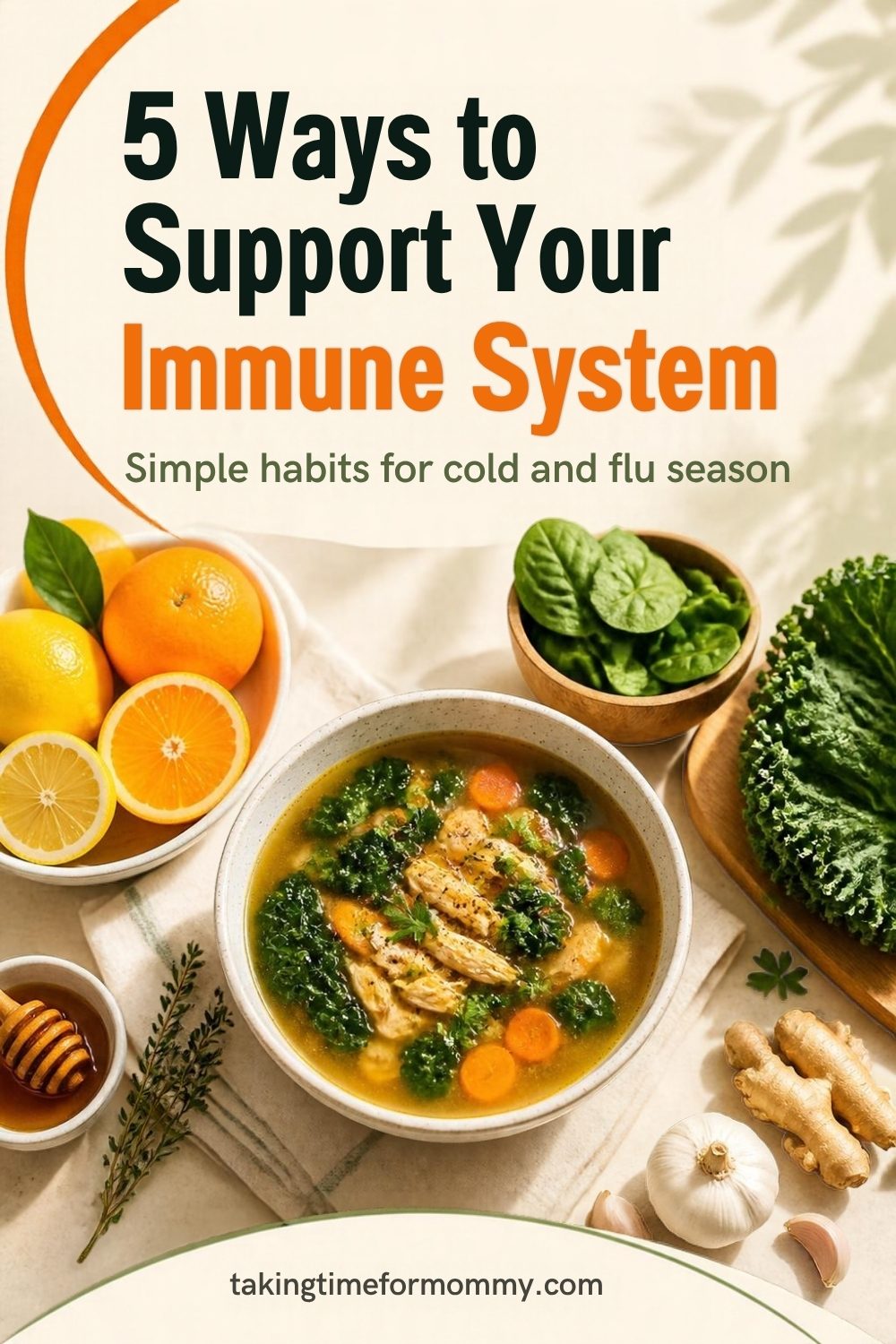
- Eat a colorful plate. Fruits and vegetables like citrus, berries, peppers, broccoli and leafy greens provide vitamin C and other nutrients your body needs. Garlic and warm soups are tasty, comforting additions.
- Keep moving. Regular moderate exercise, like a brisk 20 to 30 minute walk most days, is good for your whole body.
- Stay up to date on vaccines. The CDC recommends a yearly flu shot for most people 6 months and older. Ask your doctor what’s right for your family.
A few more helpers
- Drink plenty of water and warm drinks.
- Manage stress: a walk, a bath or a good book all count.
- Stay home when you’re sick so it doesn’t spread.
- Wipe down doorknobs, remotes and phones during cold season.
Love a good printable? My Free Printables Library has planners, trackers and seasonal goodies, free when you join my email list.
FAQ
Can you really boost your immune system?
You can’t supercharge it, but sleep, good food, exercise and less stress help it work well.
Does vitamin C prevent colds?
Research suggests it may slightly shorten colds for some people but usually doesn’t prevent them. Getting it from food is a great start.
When should I see a doctor for a cold?
If you have trouble breathing, a high fever, or symptoms that get worse after a week.
Save this for later! Pin it to your favorite Pinterest board.
You might also like:


Leave a Reply